Cambodia's Energy Knowledge
What is Clean Energy?
Clean energy refers to a wide range of new technologies – solar and wind power, smart appliances, batteries and electric cars (just to name a few!).
How does Solar Power work?
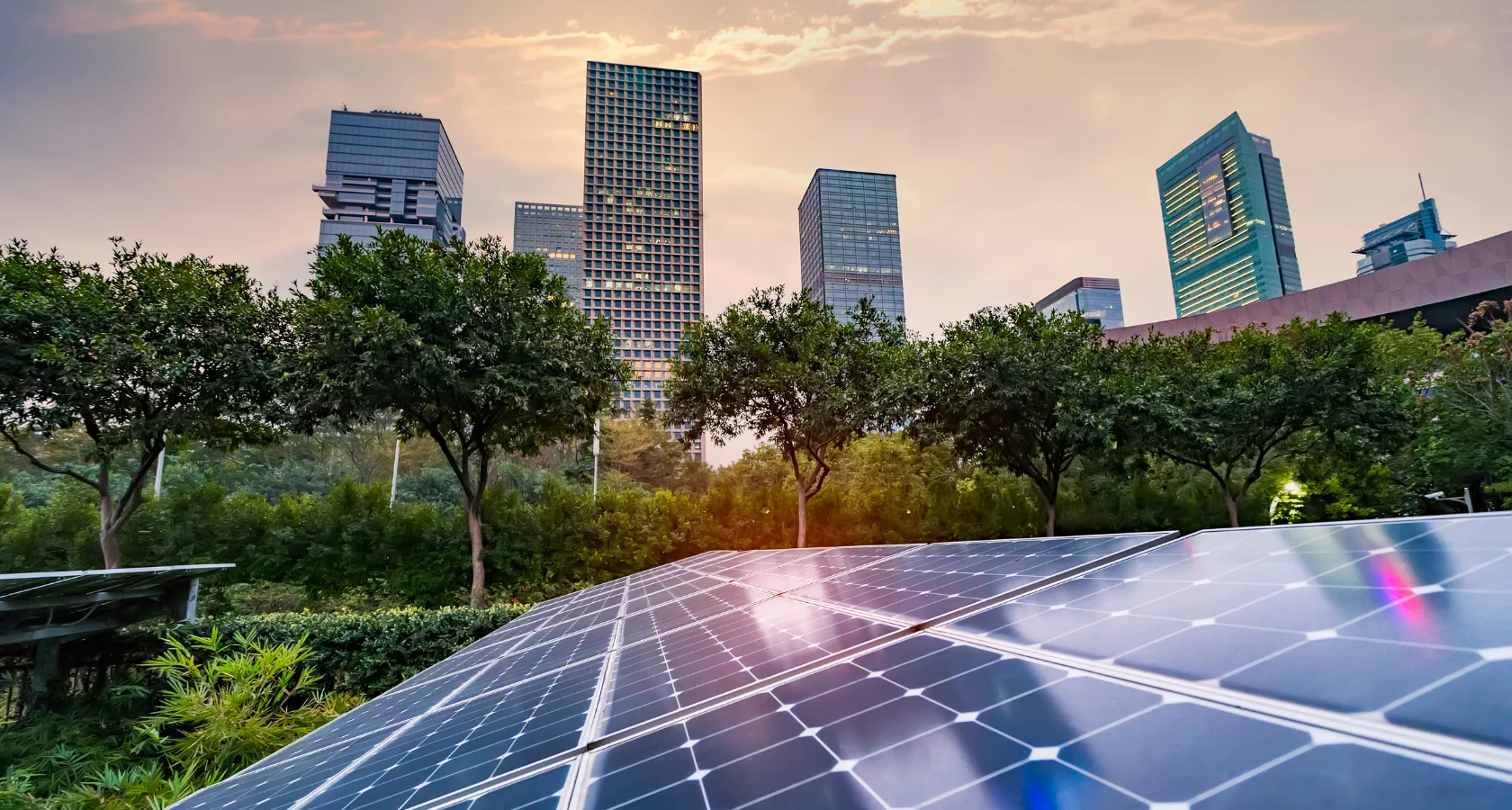
Solar panels convert sunlight into electricity. An inverter then transforms this electricity into power that can be used by homes, businesses, and the grid. This process is free from carbon emissions and only needs local sunshine to make electricity – avoid expensive fossil fuel imports.
The cost of solar power has fallen incredibly over the past twenty years – today, it’s one of the cheapest forms of electricity ever invented.
Solar in Cambodia
Cambodia is lucky to have one of the strongest solar resources in the region, with 44GW of solar power potential.
Thanks to this strong solar resource, Cambodia can meet its 2040 national solar generation target without undermining food security or damaging its forests.
Using modelling that takes into account land use, infrastructure, slope, flood risk and soil fertility, EnergyLab identified that Cambodia has over 31,000 square kilometres of land highly suitable for utility-scale photovoltaics (PV). Even more compelling, over 12,000 square kilometres of this land has low soil fertility, which means that solar can be built without replacing high-value agriculture.
We used these results to estimate how much land would be required to meet Cambodia’s 2040 Solar Goal of 3.1GW:
- 75 km² of land with standard technology
- Less than 60 km² with the high-efficiency modules expected in the next 5 years
- just 56 km² — only 0.45% of highly suitable low-fertility land with high-ground-coverage east-west systems.
That means Cambodia has more than two hundred times the land needed to achieve its 2040 solar target. You can read more about our research on solar power and food security here.
Solar in Laos
How does Wind Power work?
Wind turbines convert the wind into electricity through rotating blades connected to a generator. As wind turns the blades, the generator produces power that can be fed directly into homes, businesses, and the grid. This process is free from carbon emissions and relies only on local wind resources—avoiding expensive fossil fuel imports.
Wind Power in Cambodia
Wind power will serve as a crucial complement to Cambodia’s solar strength, providing electricity when solar is unavailable, and offering valuable diversity to reduce the country’s renewable energy risks.
Cambodia’s solar resource is strong, offering 5 to 6 effective hours of daily solar potential year-round – amongst the highest solar potential rate in the region. For decades, it had been assumed that Cambodia had no wind power potential. However, Australian funded analysis in 2019 showed that the Kingdom had a significant wind resource, with up to 6 GW of on shore potential capacity – enough to cover today’s peak power demand.
A resilient renewable energy grid needs to be able to draw power from different sources and different areas, and therefore wind power is a useful way to diversify the country’s energy mix.
Wind power can play an important strategic role in providing an alternative generation source which complements low-cost solar. For example, while it might not be sunny in Phnom Penh it may be windy in Kampot. And when it is not windy in Kampot, it can be in Mondulkiri. By diversifying the types of renewable energy technologies a country has and the locations these generators are built, Cambodia can build a more resilient system.
While the optimal bedrock of Cambodia’s energy system will be solar and hydropower, wind must be a strategic, complimentary technology that supports demand when it is not sunny.
Wind Power in Laos
Battery Energy Storage System (BESS)
Batteries are the glue that hold renewable energy-dominated grids together. They store power when it is plentiful, while smoothing out fluctuations in solar and wind power, thus playing a vital role in helping keep the grid stable.
Why are batteries so important in Southeast Asia?
BESS systems can do much more than store energy - they have a wide range of additional valuable grid services required by a modern energy system:
Energy Storage & Load Shifting: They store electricity when there’s excess supply or low demand, then release it during peak hours when electricity is expensive and scarce. This helps balance the grid by smoothing the load curves and reducing curtailment, and reduce the total cost of running the energy system. They also even out the variable output from solar and wind power, making renewable energy more predictable and grid-friendly.
Frequency & Voltage Regulation: They can instantly adjust power output to keep electrical frequency stable and maintain proper voltage levels across the grid. This prevents equipment damage and ensures consistent power quality.
Grid Inertia & Stability: They provide resistance to sudden changes in supply or demand, helping the grid maintain stability during disruptions or fluctuations.
Reserve Power & Black Start: They can supply immediate backup power when generators fail and help restart the entire grid after complete blackouts by providing power to get other generators running again.
Outage Support: They keep critical services running during power outages and prevent widespread blackouts.
Batteries can do all of these things much more quickly than any other technology. However, maximising the value of batteries requires new ways to contract services.
Electric Vehicles
Electric Vehicles (EV) are quickly beginning to appear on Cambodia’s roads.
In May 2024, the Government released the National Policy on Electric Vehicle Development 2024-2030, aiming to register 770,000 EVs by 2030:
- 720,000 electric motorcycles (E2Ws)
- 20,000 electric tricycles (E3Ws)
- 25,000 private electric cars (E4Ws)
- 5,000 commercial or heavy-duty electric vehicles
As of November 2024, there were 6,540 registered EVs, with around 30 companies offering a range of 2, 3, and 4 wheelers.
Analysis by the World Bank shows that it is already cheaper to operate an electric motorbike in Cambodia, while new maximum charging rates have meant that running an EV car is significantly cheaper than a regular internal combustion engine (ICE) car.
HOW CAN EVS SUPPORT THE GRID?
Cambodia has some very ambitious growth targets for EV ownership. All of these new vehicles will increase the demand on the electricity grid.
If this new electricity demand isn’t well managed it could require major investments in new power generation, transmission and distribution grids. But if charging is flexible and responsive, then it will create a more resilient grid.
The main goal in managing the increasing load from EVs is to ensure that charging is spread over the day – rather than only in the evenings when people arrive from work using their air conditioner, watching TV and cooking dinner, all while unable to generate solar power.
This can be addressed by making it easy for EV drivers to own or find slow-charging outlets (charging the EV with less power, while taking more time to charge it fully) which put less strain on the electrical power grid compared to fast chargers – which draw a lot of power to fully charge the EV in a short time.
These slower chargers can be located at home, in office blocks, shopping centres and public spaces. It is also important to encourage people to charge during the day, when solar energy is plentiful.
Cambodia can also reduce strain on the grid by coupling EVs with home solar systems.
Thanks to MME’s new solar regulations, households can install up to 10 kW without paying a compensation tariff. This is the cheapest and most efficient option for charging an EV – requiring no extra investment in transmission or distribution grids.
In the longer term EVs may be able to provide support to the grid – injecting power back into the grid when it is needed, helping maintain a stable frequency and helping create a more resilient local system.
This could be far cheaper than installing large-scale batteries, and may represent a win-win for both consumers and EDC.
Realising this potential will require significant advancements in Cambodia’s regulatory framework, which will take substantial investment in metering and grid operations.

Electricity and heat energy provided by sources that renew and don’t run out like the sun, wind, sustainable hydro and biomass. It’s also about using technology to do the same thing with less energy and optimising the balance of energy supply and demand, like battery storage, electric vehicles, and demand management.
Why is clean energy so important?
Cheaper
Cambodia's new solar farm is priced at 3.877cents/kWh which is less than half the cost of coal and much cheaper than the cheapest hydro project!
Cleaner
Renewable energy releases no direct emissions while coal and fossil fuels release air pollution and carbon emissions.
More Employment
Investment in renewable energy in South East Asia doubles job creation in the energy sector.
Faster
Solar capacity can be installed within months whereas coal and hydro projects take 3-7 years to build.
Lower Carbon
Solar and wind electricity have no carbon emissions - they do not directly contribute to climate change. While coal and other fossil fuels are the largest contributors to emissions in ASEAN.
More Secure
Renewable energy can be installed locally reducing the reliance on our neighbours.